Chai
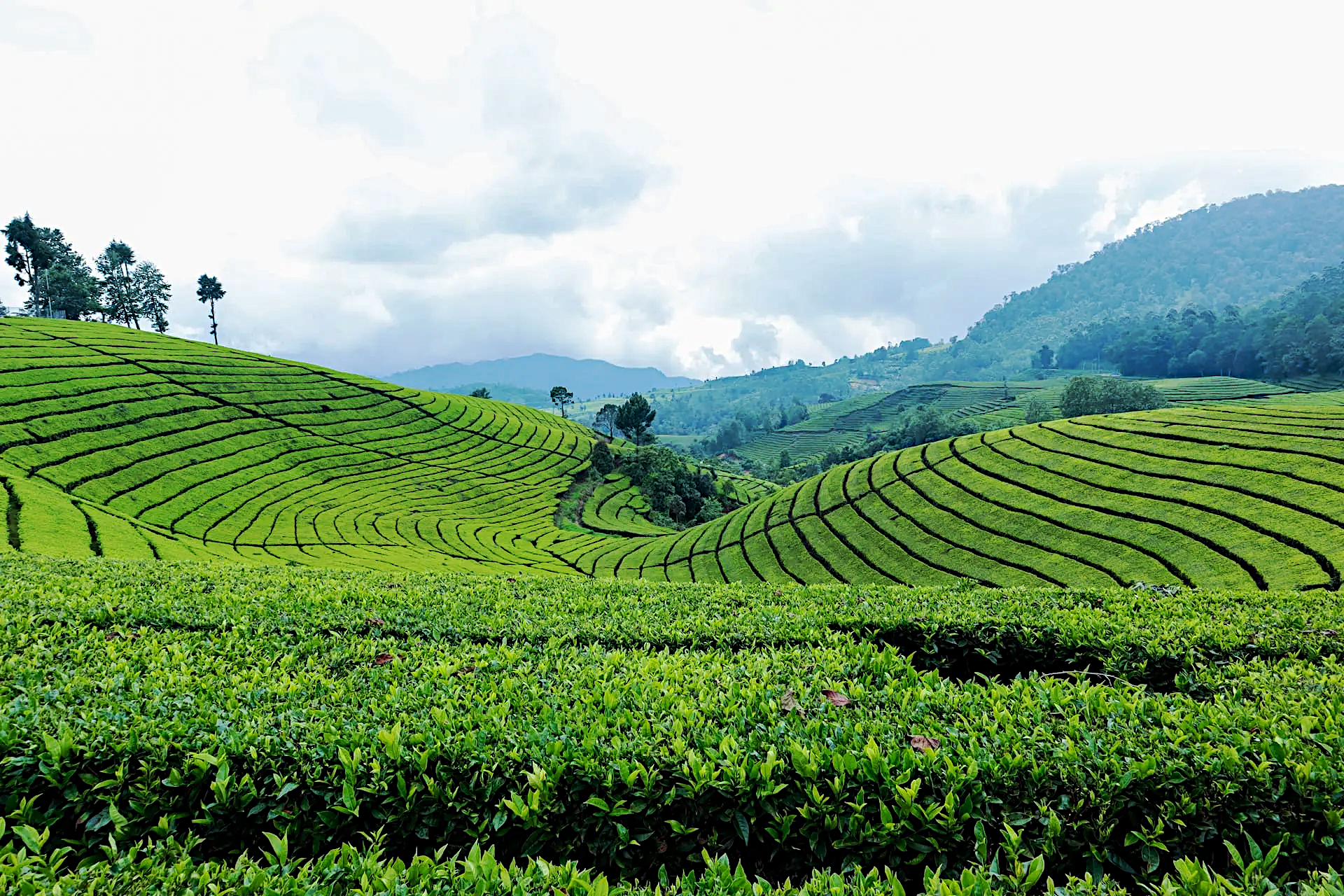
Tea fields, Kiambu, Kenya
Today, Kenya is “the world’s” largest exporter of black tea.
A non-native crop, tea was introduced in Kenya by a British settler in 1903. Commercial cultivation began in 1924, and was limited to European settlers. The British ‘tea break’ fueled the industrial revolution, and it’s introduction into India followed a similar pattern of cultural dispersal.
In Mzungu 1989, I refer to a cafe I visited often while living in Kenya. The proprietor served hot chai with vanilla and lavender muffins, still warm from the oven. Chai is the Hindi word for tea. Just as Swahili appropriated Arabic words, the word for tea in Swahili is chai. When I lived in Kenya, chai served as a slang word for a bribe - Letea chai, Bwana! meant ‘fork over some money’.
While British and upscale resorts served afternoon tea with steamed milk on the side, Kenyans have largely adopted the Indian custom of boiling black tea in a mixture of milk and water. Some add spices during preparation, as the Indians do — ginger, cinnamon, cardamom and cloves is a popular blend. Invariably, the host comes around with a sugar bowl and a tablespoon, asking, ‘one, or more?’.
Chai is ubiquitous in eastern Africa. My favorite chai recipe came from a Burundi native who lived in Nairobi for years before settling in California. It spread as Indians and other Asians immigrated to Kenya and Uganda (not always voluntarily) to build railways for Britain.
In 1954, the British colonial administration developed the Swynnerton Plan which eventually allowed Kenyans to grow tea on small share holds. A decade later, Kenyans gained independence, and retained the shareholder system of tea production. Larger conglomerates arose and now are introducing mechanization, which is displacing traditional farm workers.
One of my fondest Kenyan memories was visiting a friend’s home near the Abberderres on a rainy day. The dense, forest green trees framing the brilliant, chartreuse tea fields still evokes a chill.
While I’m thrilled that Trader Joe’s and Starbucks offer “chai” syrup commercially, I still prefer my Burundian friend’s recipe on a bitter winter day. BTW, despite the “chai” syrup packaging, the term Chai Latte is actually redundant.