Synopsis
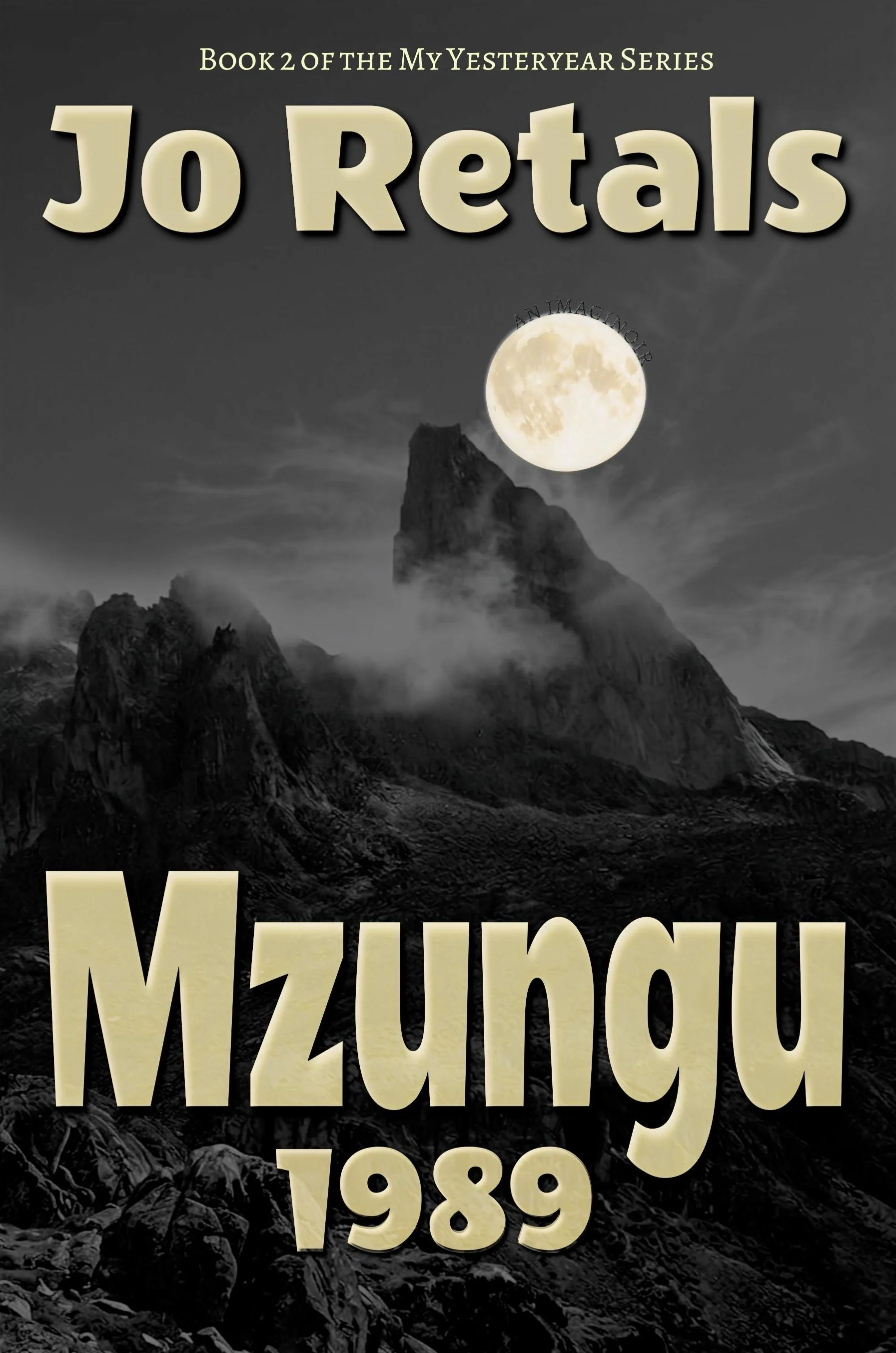
“A moonlit vision on Mt. Kenya propels an American expatriate into a collision of faith, family, and ambition.”
Jo Retals escaped Pennsylvania for the Kenyan Highlands.
When a mountaintop vision heralds a new adventure, local politics and workplace obligations force a life defining choice — an extraordinary life for his family now, or an extraordinary opportunity for a prestigious future.
Background
-
Set in rural Kenya during the end of the Cold War, Mzungu 1989 explores how cultural and institutional narrative impacts personal agency.
In the age of Glasnost and Perestroika, the Soviet Union is shedding the constraints of Marxist ideology. In Kenya urbanization forces high profile challenges to traditional culture.
In Mzungu 1989, graduate work and job reassignment force the narrator to confront local tradition and the dogmas of his faith. Yet, he discovers that his own culture can be blinded by ideology.
-
Mzungu 1989 is an Adventure novel, narrated by a confident family man living an extraordinary life. At the nexus of contract conclusion and graduate degree completion, he must discover his next adventure. Can he maintain an extraordinary life?
The author’s internal journey is a status story. The narrator investigates an insight about his community and society. Will academic credentials automatically invest him with the respect he craves?
Based on actual events from the author’s life, Mzungu 1989 weaves complementary storylines – one a formal interview, and the other a personal letter.
Excerpt
A mud track lay before us. Tire shaped gouges ran uphill, disappearing into the towering forest. We were headed to our audience with a forlorn patriarch at his primeval encampment. If you've ever watched Apocalypse Now, you get the idea.
Kimani and I looked at each other.
"Even though we walk through the Valley of Death, we will fear nothing," Kimani quoted.
We set off up the hill to face the Chairman.
Kimani leaned into his steps, and his goal. Only his devout investment in reconciliation, steady as his pace through the mud, made the prospect seem plausible.
Although I'd recently summited Mt. Kenya recently, slogging uphill at seven thousand feet wasn't effortless. My shoes slapped into the mud. I wasn't taking steps so much as repeatedly freeing my feet. It felt like wading in the ocean. Engulfed in the cold, humid air, my mind wandered back to Point Lenana.
I felt called to a new adventure. I suppose trekking into a remote village in the highlands qualified. Most of the people I grew up with never made it out of our hometown. Yet I found myself wondering what more I could accomplish here — not a gray hair on my head, barely fluent in Kikuyu and in country a mere three years.
Adventure was a vehicle; it afforded me the freedom to prove who I really was. But my ambition was more grandiose — I wanted to do something extraordinary with my life. Wasn't that was the promise of Evangelical Christianity? 'God loves you and has a wonderful plan for your life.'
The steep grade leveled a bit, but I was breathing too hard to sense relief.
It made no sense for the council to send me, yet as a friend, I wanted to support Kimani. The irony that we were forced to go and pay homage to a rival in the name of Christian ministry weighed on every step.
Could I actually help these two leaders to work together?
It turned out that I could. In fact, the Chairman would insist on it. The question we Westerners are usually so careful to ask in these situations only revealed itself to me hours later, as I sipped the last of my chai.
What will it cost?