Full Circle — Shotokan
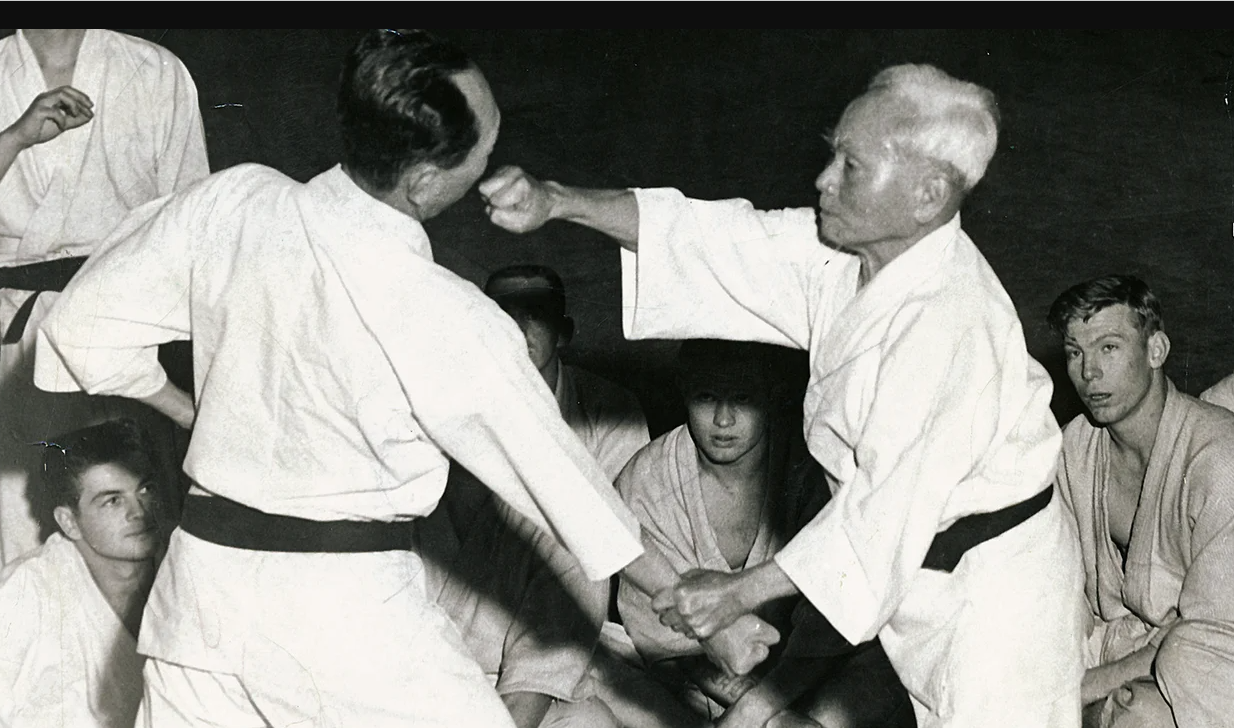
Shotokan Founder, Gichin Funakoshi
Okinawan founder, Gichin Funakoshi, introduced his martial arts style, Shotokan into Japan in the 1920s. It was adopted at a national level. In 1955, one of Funakoshi’s students, Tsutomu Ohshima, brought Shotokan to California. The California Karate Association was formed and karate became a trend in the United States. By the late sixties, the association had expanded across the country. It was rebranded Shotokan Karate of America [SKA].
Which benefited me greatly, as I explain in Heat 1973. My father signed me up for lessons when I entered high school. I stayed with it long enough to gain the confidence I needed. but after high school, I discontinued my training.
A couple decades later, in my thirties, I returned to Shotokan. I learned more and trained faithfully. But my career again required me to relocate. With the new job and a family, I let my training slip away.
Then, in 2020, I found a dojo in Phoenix that taught Shotokan. My intention was solid, but so were my knees and hips. I had lost the flexibility required to train. Which frustrated me, because I worked diligently all my adult life to maintain flexibility and fitness. I acquiesced to my body, reasoning that if kata stances occasioned knee pain, then absorbing kicks, punches and takedowns would be overwhelming.
After the pandemic, I relocated again to the Midwest. I decided to search for classes in the gentler, non-contact style of Tai Chi. Instead, I discovered Qigong. The Primordial Limitless Gate lineage took me from novice to intermediate level in less than a year. While attending their weekend retreats, I met a fellow student who had studied Shotokan since last century, when it arrived in America. In contrast, to me, he stuck with his training and rose in very high in rank.
But we all age. So both of us sought out a gentler form of fitness training. We’d come full circle, from Shotokan to Qigong.