Mt. Kenya
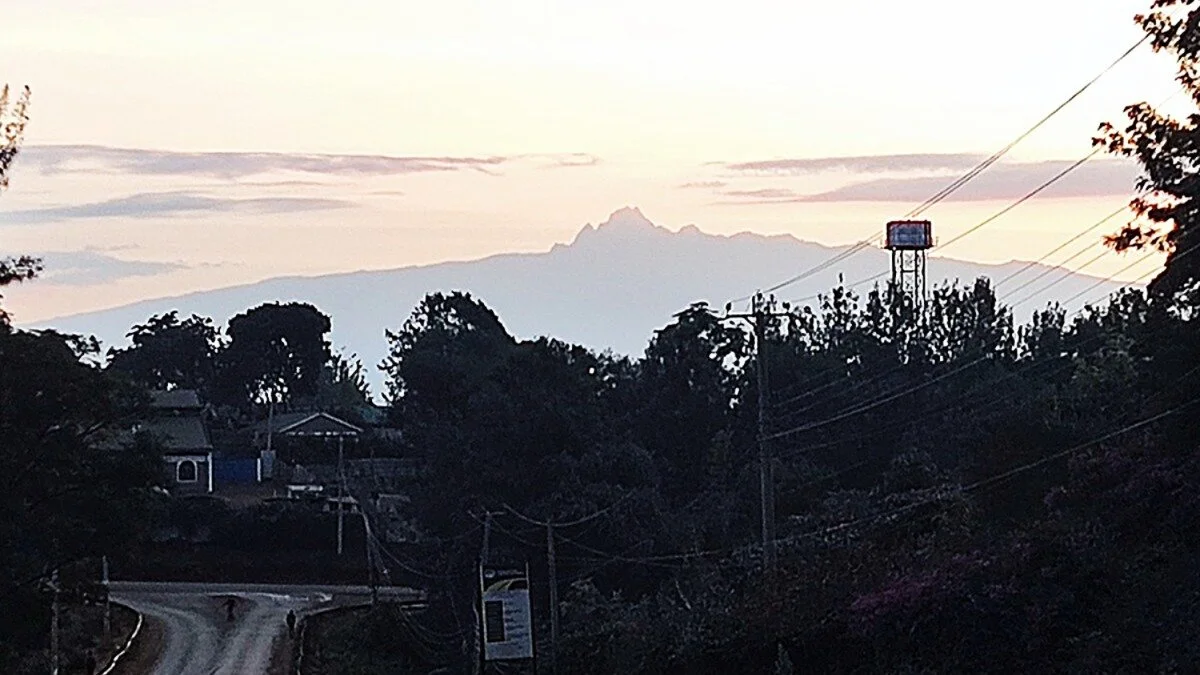
Mt. Kenya
When I lived in Kenya, I could walk out in my back yard and gaze at Mt. Kenya.
A complete sighting was rare, due to cloud cover. But the mere knowledge of its presence felt grounding. I imagine the Kikuyu, Meru and Embu tribes who settled there felt the same. They named the mountain, Kirinyaga, which is roughly Place of Brightness. In their origin stories, Kirinyaga is the home of Ngai, the creator.
It certainly seemed like the place of brightness during my trek up the mountain. I was extremely fortunate to have a clear night up at base camp, watching the full moon ascend over Point Lenana.
As those Bantu tribes had supplanted earlier Cushite and Niolotic groups, so the British moved in and established Kenya as a Protectorate. In 1932, the colonial government designated the Mt. Kenya region as a Forest Preserve, then elevated it to a National Park in 1949. Both events displaced many local residents.
In 1963, at Kenyan independence, the new government saw the potential of land conservation for tourism and access to hard currency. Kenya not only retained the national park system, but expanded the protected areas.
Land use has generated significant controversy between local residents and the national governments. UNESCO’s designation of Mt. Kenya National Park as world heritage site bolsters its attractiveness to tourism. Yet, for the farmers and pastoralists, whose traditional lifestyle depends on land availability, progress exacts a grave cost.