The Fabulous VW Beetle
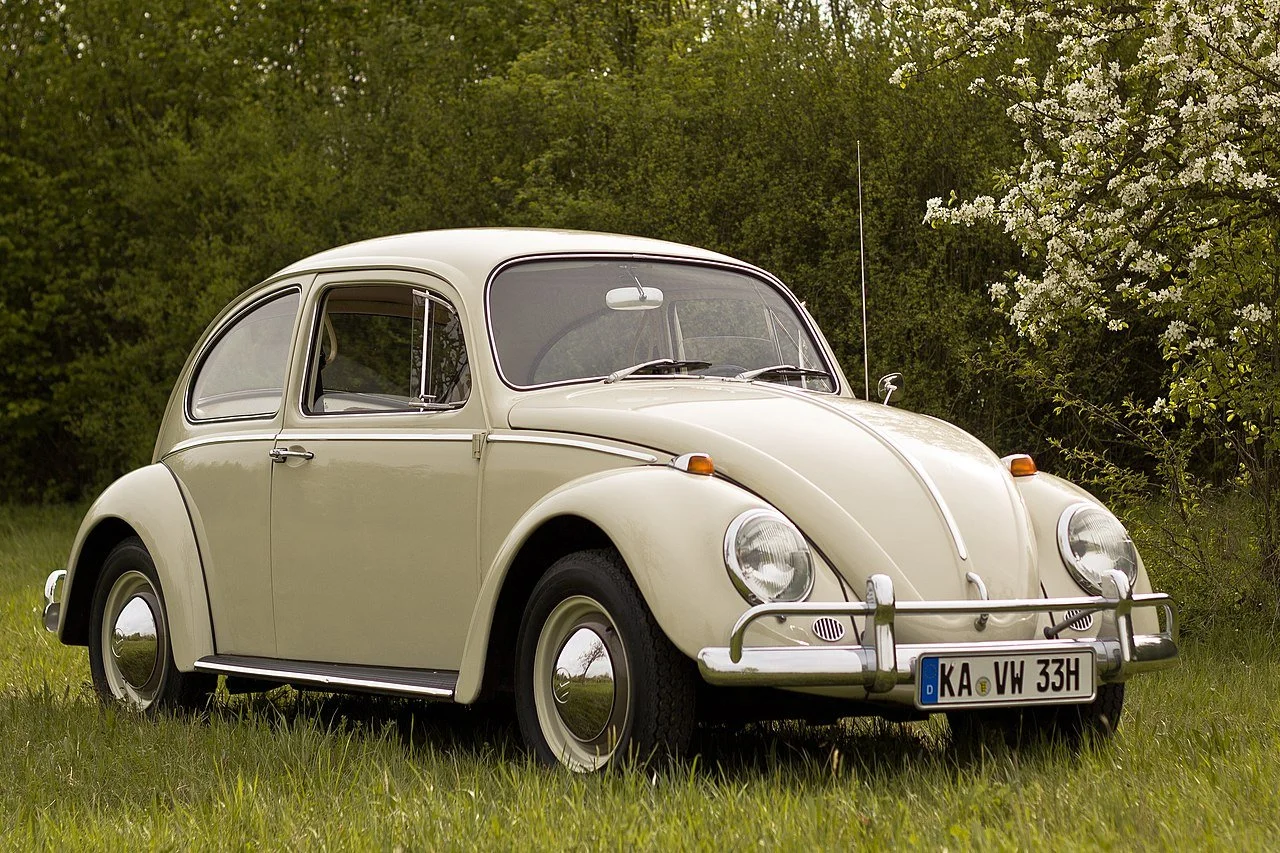
1936 VW Beetle
If you are willing to ignore the personalities involved, the history of the Volkswagen Beetle is a fascinating story of cultural evolution.
A humble vehicle, developed as a nationalist political symbol in one era, evolved into a generation-defining, counter-cultural symbol in a different era.
German chancellor, Adolf Hitler, wanted a symbol to represent his party’s policies of nationalist socialism. The Chancellor’s specs included:
seating for two adults and three children
Fuel efficiency of (US) 39 mpg
Air cooling, to prevent winter freezing
Interchangeable components
An engineer named Porsche won the contract and designed the Volkswagen (People’s Vehicle). World War Two interrupted production but the vehicle was mass produced following the war. Ironically, the British got the factory churning out VWs at full capacity. U.S. importers lobbied heavily for reduced tariffs on VWs. The people’s cars were reliable, inexpensive to operate and relatively easy to maintain. (Unlike other imports, for which parts were scarce and expensive.)
Like most American trends, the Baby Boomer counter-culture began in Southern California. From surfer culture to hippie culture, “turn on, tune in, drop out’ epitomized the resistance against industrial era hegemony. Part of the industrial culture was the huge, gas-guzzling muscle cars produced in Motor City. When Volkswagen wanted to distinguish itself in the early sixties, a full page newspaper ad urged consumers to ‘Think Small’.
Jack Kerouac’s On The Road glamourized the road trip. While counter-culture people rejected muscle and status vehicles, they still wanted reliable transportation. In the early sixties, consumer advocate Ralph Nader published his expose’ Unsafe at Any Speed: The Designed-In Dangers of the American Automobile. It was aimed at the Chevrolet Corvair, an American model produced to compete with imports like the Volkswagen. The Corvair’s safety record and quality issues were no match for the Volkswagen.
As it turns out, the German Chancellor’s specs actually produced a vehicle that appealed across cultures. Economy, reliability and easy maintenance are transferable values.
Volkswagen’s minibus was adopted by the surfer culture, and the Beetle caught on with the larger population. Even Chicago 7 member, Abbie Hoffman, drove one. When the 1973 OPEC oil embargo created fuel shortages, economical vehicles like the Beetle increased in popularity.
In Heat 1973, I drove a 1968 Beetle. With it’s custom paint job and removable passenger side footrest panel, I was able to tool around in style and smuggle guns and hashish around town. Eventually, I drove my fabulous VW from Pennsylvania to Southern California and back. It was still running fine when I sold it.