ADHD
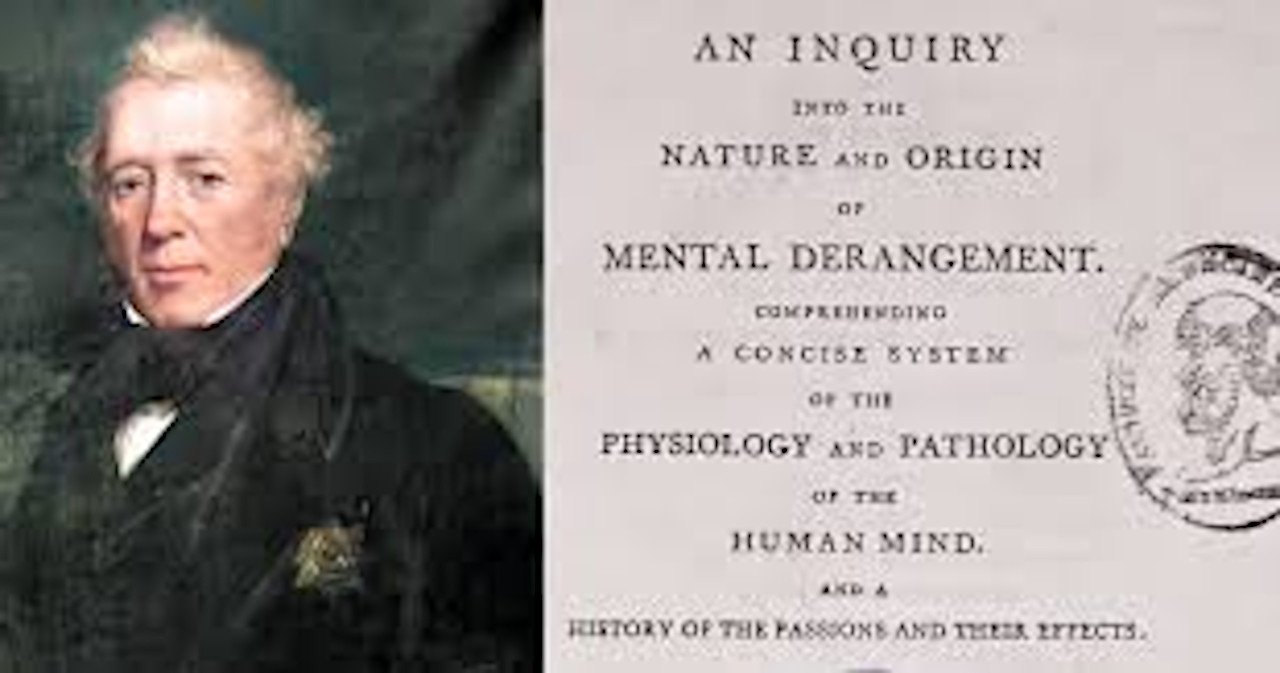
Cricton’s 1798 treatise
Imagine playing a video game in which the game assigns your character’s superpowers and vulnerabilities.
Imagine further that you don’t know what they are. No one else knows your strengths and vulnerabilities because most people in your world have never encountered them. Your allies and friends can only judge you by their own, typical, characteristics.
That sums up my experience as a young person living with ADHD. As a left-handed child, I knew I was objectively different from others. But the society I lived in was at least aware of left-handers and prepared to deal with, if not accommodate, them.
ADHD? My father and my fourth grade teacher employed the same tactic. One day I asked the wrong question, and the teacher hauled me outside the classroom, grabbed me by the shirt and slammed me into the door. “You’ve been nothing but trouble since you got here,” she told me, “and I’m sick of it.” To this day, when I hear stories about caring teachers, I cringe.
Scottish physician, Alexander Crichton, documented “the fidgets'' in his 1798 book, titled An Inquiry Into The Nature And Origin Of Mental Derangement : Comprehending A Concise System Of The Physiology And Pathology Of The Human Mind And A History Of The Passions And Their Efects. To his credit, Crichton noted that “fear of the rod” (or getting slammed into the door) was not effective. He advocated alternative educations for children afflicted with “the fidgets”.
In 1844, Dr Henrich Hoffmann published a poem about Fidgety Philipp. But it was English pediatrician George Frederick Still’s 1902 work on “behaviorally disturbed” children that is credited as documenting what we refer to now as ADHD. The condition was variously attributed to genetics, brain damage, and neurodivergence over succeeding decades.
In 1968, the American Psychological Association’s bible, the DSM II, listed a diagnosis labeled hyperkinetic impulse disorder. In Heat 1973, I delve into my neurodivergence with Detective Balfour, a psychology major. He’s as baffled as I am. My father didn’t believe in therapy, so I had to manage without the stimulants they were already prescribing in 1973.
Researchers now realize that Attention Deficit Hyperactivity Disorder is a result of neurodivergence. Our brains are wired differently from most people. There are different “types” of ADHD, but generally, here’s how it plays out in daily life.
The title of the 2022 film captures the essence of ADHD, Everything Everywhere All at Once. Some people express their hyperarousal physically as hyper-activity. But it is our private, inner, worlds that cause us grief.
Emotions arouse us to take action – move, converse, strategize. Human development and socialization provide us heuristics so that we can rank the relative importance of our emotional cues. People with ADHD lack emotional modulators. We are constantly stimulated by anything that happens. And if nothing is happening externally, our minds remain stimulated by our memories and predictions.
This is why I fell in love with cannabis in my youth. Everything slowed down to the pace I imagined normal people lived at. Personally, I don’t believe drugs of any type are a viable long term solution. If I could give my younger self some advice, I would urge him to stick with the Transcendental Meditation course he and his friends attended in high school. It would have spared the younger me significant trouble.