S.T.R.E.S.S.
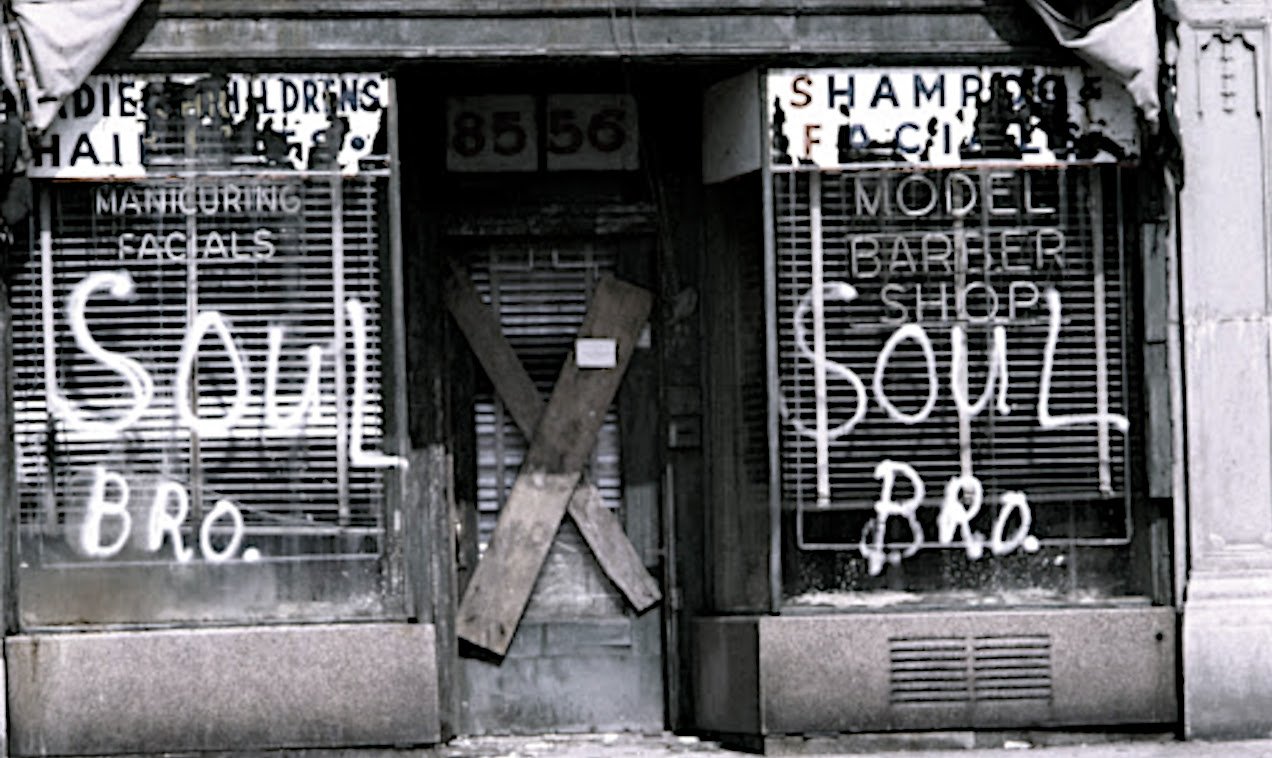
1967 Detroit riots
I was once a bureaucrat, in charge of writing government policies and public regulations.
It's a thankless job. Enforcing policies and regulations invites even more disdain. What many people may not be aware of is that governing is much like refereeing sports. No matter which calls you make, someone will complain. When public opinion surveys routinely reveal that two-thirds of the nation disapprove of the present direction of the country, that statistic does not necessarily mean that all of the respondents agree on which direction the nation should be taking. People hold competing interests, and the government attempts to arbitrate.
As a result, governments sometimes produce initiatives like S.T.R.E.S.S. (an acronym for Stop the Robberies and Enjoy Safe Streets). The Detroit Police Department's special anti-crime unit was formed in the early 1970s as a response to the social dynamics of the era.
The 1964 Civil Rights Act was followed by urban riots annually from 1965 - 1968. This, plus forced busing as a desegregation method, prompted an exodus from urban areas. Many popular sources categorized the exodus as ‘White Flight’. But people of all ethnicities wanted out of areas where the government couldn’t control crime. Many African-American families were restricted by housing discrimination. So the demographics of the city changed. Regardless of ethnicity, citizens and businesses who remained in the city wanted to be free of crime.
The Detroit riots were the most destructive in the nation. Even African-American businesses who painted Soul Brother on the outside of their buildings were not immune to arson and looting. The City of Detroit government adopted a ‘law & order’ approach to solving crime (“When the looting starts, the shooting starts”). After seeing their private citizen and business tax base plummet, the administration institutionalized this approach by creating S.T.R.E.S.S..
The aim of the unit was to interdict criminals prior to crimes taking place. In practice, much of the interdiction came in the form of bullets rather than arrests. For citizens disgusted by the crime disrupting their neighborhoods, this was simply justice. (As one jailhouse philosopher told me at the time, “if the motherfucker was robbing somebody, why he bitching when they shoot him? They police.”)
But other people had a problem with S.T.R.E.S.S., and the police as a department. While the demographics of the city had changed, the demographics of the police force remained constant - ninety percent of Detroit police were white. Further skewing the results was the targeting of ‘high crime areas’. African-Americans were still suffering discrimination in hiring, leaving many youths unemployed. The gun culture, which families of all ethnicities brought with them when they relocated from Appalachia and the South, ensured that youths had the means to turn to street crime. So, when the mainly white police officers were sent into mainly black neighborhoods to interdict crime, it did not play well on the evening news. One state politician called S.T.R.E.S.S. ‘a hit squad.’
That politician was Coleman Young. He ran for Detroit mayor on a platform of social justice and pledged to disband S.T.R.E.S.S. as soon as he was elected. His opponent was former police commissioner, who stuck with the law & order platform.
Again, governments can never please everyone. They can implement solutions and hope that the solutions work for the majority of citizens. The administration attempted to meet the needs of taxpayers and businesses, but ended up alienating many voters. Unfortunately for the administration, voting power is not proportional to the amount of taxes contributed. Coleman Young narrowly won the election. He was Detroit’s first African-American mayor. He did get rid of S.T.R.E.S.S.